

Fanduel casino Plinko
Introduction
When I assess a casino title for real player value, I usually start with a simple question: does the format offer something meaningfully different, or is it just another familiar product with new packaging? Fanduel casino Plinko stands out because it strips gambling down to a very direct idea. You choose a stake, set a risk profile, drop a ball, and watch it bounce through a field of pins until it lands in a payout slot. That sounds almost too simple to deserve a long analysis. In practice, it is not.
Plinko has become so visible because it delivers instant clarity and instant tension at the same time. A player understands the interface in seconds, but the actual session experience can vary sharply depending on settings such as rows and risk level. On the surface, it looks lighter than a slot. Underneath, it can feel more brutally honest. There are no reels to distract you, no story layer, no Fanduel Casino bonus page round designed to soften the wait. Each drop is a direct encounter with probability.
That is exactly why Fanduel casino Plinko deserves a focused review. It appeals to players who want fast rounds, visible randomness, and a strong sense of personal control over session style. But it also has limits. For some users, this format is exciting and clean. For others, it becomes repetitive quickly or creates a misleading sense that the outcome is somehow trackable by eye. My goal here is to explain how Plinko works, what it really offers, where the pressure points are, and what a player in Canada should understand before launching a session.
What Plinko is and why players keep coming back to it
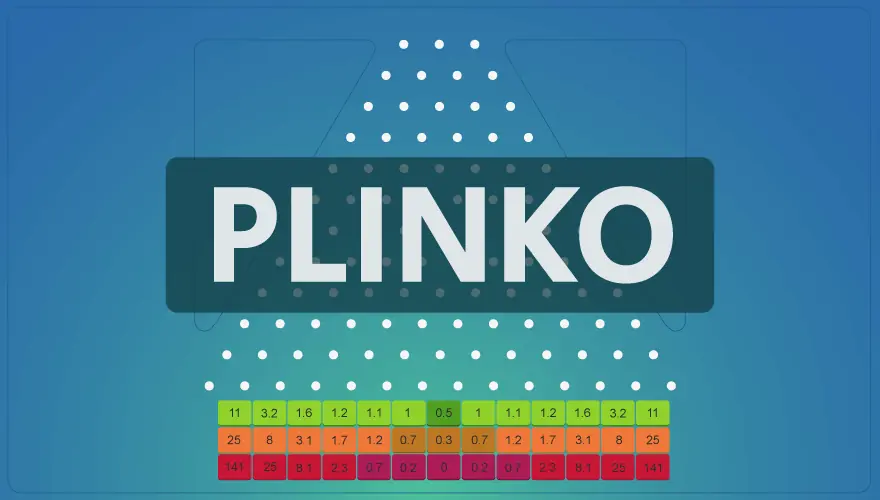
At its core, Plinko is a probability-driven casino game built around a falling ball and a payout grid. The ball drops from the top of the board, hits pegs on the way down, and shifts left or right until it lands in one of several multiplier slots at the bottom. Lower multipliers tend to sit in the middle where the ball is more likely to land. The larger rewards usually appear near the edges, where the ball reaches less often.
This structure matters because Plinko creates a rare combination: visual simplicity with highly variable outcomes. A slot can also produce uneven results, of course, but its logic is hidden inside reels, symbols, paylines, and bonus triggers. In Plinko, the tension is visible. You can literally watch the path develop in front of you. That transparency is one of the biggest reasons the title attracts attention on platforms such as Fanduel casino. Players comparing real money options should also check Fanduel Casino no deposit bonus codes guide for Canadian players before deciding how the account, games, or cashier will fit their play.
Another reason is pacing. A standard spin on a slot often includes animations, pauses, symbol evaluation, and secondary effects. Plinko is quicker and more stripped back. The result arrives fast, and the next decision arrives just as fast. For players who like compact sessions with little downtime, that rhythm is a major draw.
I would add a more subtle point here. Plinko often feels more personal than it really is. Because you choose the drop settings and then watch the ball bounce in real time, the session can create a stronger emotional link between decision and result. That sensation is powerful, even though the mathematical structure remains random. It is one of the reasons the game can feel more intense than its minimal interface suggests.
How the Plinko system actually works in a live session
To understand Fanduel casino Plinko properly, you need to separate what the eye sees from what the game is doing mathematically. The visible part is straightforward: a ball falls through a peg board and lands in a multiplier slot. The practical part is that every drop is shaped by a pre-defined probability model tied to the selected settings.
Most versions of Plinko revolve around a few core inputs:
Bet size — the amount staked on each drop.
Risk level — usually low, medium, or high, affecting how payouts are distributed.
Rows — the height of the board, which changes the number of bounce decisions before the ball reaches the bottom.
Manual or auto play — whether you trigger each drop yourself or run repeated rounds automatically.
The movement itself appears organic. The ball hits peg after peg and drifts left or right until it reaches the bottom row. But from a player perspective, the important point is not to read patterns into short streaks. The path looks physical, almost mechanical, which can tempt people into believing that recent drops tell them something useful about the next one. In reality, the visual journey makes randomness feel understandable, even when it is not.
Rows influence the way a session feels more than many new players expect. Fewer rows usually mean a shorter path and a tighter, less dramatic drop. More rows create a longer visual sequence and often a wider spread of possible ending positions. That does not automatically mean better value. It means a different shape of variance and a different emotional tempo.
Risk level is even more important. In low-risk mode, the payout map is usually flatter. You are more likely to land on modest multipliers, and less likely to see extreme outcomes. In high-risk mode, the center may become less rewarding while the edge multipliers grow sharply. That setting can produce long stretches of underwhelming returns interrupted by occasional spikes. This is where Plinko stops feeling casual and starts feeling demanding.
Why the game feels fast, sharp, and sometimes deceptively simple
One of the most useful ways to think about Plinko is as a rhythm-based casino product. The attraction is not just the possibility of a big multiplier. It is the cadence of repeated drops. The cycle is short: choose settings, drop, resolve, repeat. There is almost no narrative layer between action and result.
That has two practical consequences. First, bankroll movement becomes very visible. In a slot, a player may focus on symbols, near-misses, free spins, or bonus anticipation. In Plinko, there is less noise. You notice quickly whether the session is holding balance, grinding downward, or producing occasional recoveries. Second, because each round resolves so quickly, players can move through a large number of bets in a short time if they are not careful.
This is where the game can be deceptively simple. The interface looks harmless. The decision tree is small. Yet the speed of play can make a session more aggressive than expected, especially when auto mode is enabled. I have seen many players underestimate this point because Plinko does not look like a high-pressure format. In reality, the pressure comes from repetition, not from visual complexity.
A memorable observation here is that Plinko often feels calmer than it is. The board, the falling ball, the clean design — all of that can create a relaxed first impression. But once the session begins, the game can chew through a bankroll with surprising efficiency if the stake is too high for the chosen risk setting. Anyone looking at the site from an SEO-level comparison angle can use safe real money play at Fanduel Casino to evaluate a closely connected casino feature.
Risk levels, probabilities, and what they mean in practical terms
Any serious review of Fanduel casino Plinko has to focus on expectation rather than isolated highlights. Players are often drawn to the large top multipliers shown on the board, but those values are only meaningful when viewed alongside how rarely they are hit. A large number at the edge of the payout table is not a promise. It is a marker for a low-probability event.
The practical question is not “Can Plinko pay big?” It can. The better question is “What kind of session am I accepting in order to chase that outcome?” That answer depends heavily on the selected risk mode.
| Setting | Typical Session Feel | What It Usually Means for the Player |
|---|---|---|
| Low risk | More stable, less dramatic | Frequent smaller returns, fewer sharp spikes, slower emotional swings |
| Medium risk | Balanced but still volatile | Mix of modest outcomes and occasional stronger hits, suitable for testing the format |
| High risk | Uneven and demanding | Longer dry stretches are possible, with rare large multipliers doing most of the heavy lifting |
Players in Canada trying Plinko for the first time should pay close attention to this distinction. A high-risk board may look more attractive because the maximum multipliers are visibly larger, but the session experience changes dramatically. You are no longer playing a gentle drop-and-watch format. You are accepting a setup where many rounds may return little or nothing meaningful while waiting for a rare hit.
Another useful observation: the visual path of the ball can make near-edge finishes feel like “almost wins” in a way that resembles near-miss psychology in slots. The difference is that in Plinko the illusion is even stronger because the route is visible. Watching a ball drift toward a premium slot and then bounce away can feel significant, but mathematically it is just part of the distribution. A player should be aware of that emotional trap.
Who Plinko suits best and who may not enjoy it for long
Plinko is not a universal fit, and that is not a weakness. It simply has a distinct style. I find it suits players who value directness, quick decision cycles, and visible randomness. If you enjoy seeing the result develop in front of you instead of waiting for reels to stop and symbols to calculate, this format makes sense.
It can also work well for players who like testing different session profiles. By adjusting rows and risk level, you can shape the experience more actively than in many standard slot sessions. That element of control is part of the appeal, even though it does not remove chance.
At the same time, Plinko may not satisfy players who want layered entertainment. If you prefer story themes, expanding symbols, free spins, bonus rounds, or progressive feature chains, this format can feel too bare. The entire experience revolves around repeated drops and payout distribution. There is very little decorative structure around it.
It may also be a poor fit for players who are prone to chasing patterns. Because the board is visual and each bounce can be watched, some users start assigning meaning to recent paths, edge streaks, or clusters in the center. That mindset can distort decision-making very quickly.
Plinko may suit you if you like fast rounds, clean interfaces, and a transparent result cycle.
It may not suit you if you want deep features, narrative presentation, or slower sessions with more built-in pauses.
What players should understand about session rhythm and expected outcomes
The most important practical lesson in Plinko is that short-term experience can be highly misleading. A player can hit a strong multiplier early and assume the format is generous. Another can start with a cold run and conclude the opposite. Neither impression says much on its own. Because the game resolves quickly, emotional conclusions form quickly too, and that can be dangerous.
On Fanduel casino Plinko, the session rhythm is shaped less by one dramatic result than by repeated exposure to the same probability curve. That means bankroll planning matters more than many people expect. A small increase in stake can have a large effect simply because rounds are so fast. If the player also chooses high risk, the combination can become unstable almost immediately.
I usually suggest thinking in terms of session durability rather than single-drop ambition. Ask yourself how many rounds your balance can realistically support at the chosen stake. Then ask whether the selected risk level matches your actual tolerance for uneven returns. This sounds basic, but in Plinko it is one of the clearest ways to avoid a poor session.
There is also a psychological factor worth noting. In slots, players often wait for a bonus trigger as a kind of event horizon. In Plinko, no such structural milestone exists. Every drop is self-contained. That can be refreshing, but it also means there is no natural pause built into the experience. The player has to create that pause deliberately.
How Plinko differs from slots and other common casino formats
Plinko sits in an unusual position among Fanduel Casino online casino game library because it borrows the immediacy of arcade logic while operating on a gambling framework. Compared with classic slots, the differences are easy to feel.
| Format | Main Driver of Engagement | Player Experience |
|---|---|---|
| Plinko | Visible drop path and payout distribution | Fast, direct, highly repetitive, settings-driven |
| Classic slots | Reels, symbols, paylines, bonus triggers | Theme-led, feature-led, more layered pacing |
| Table games | Rules, decisions, odds structure | More strategic in appearance, often slower and more procedural |
| Crash-style games | Timing and cash-out tension | More interactive, more decision pressure before resolution |
What makes Plinko distinct is that it offers less thematic depth than slots, less procedural structure than table games, and less timing pressure than crash titles. Instead, it focuses on one clean loop: set conditions, observe randomness, collect result. That is why some players describe it as more honest. There is less packaging around the underlying gamble.
That honesty cuts both ways. Without the entertainment scaffolding of a slot, the quality of the experience depends more heavily on whether you genuinely enjoy the drop logic itself. If you do, Plinko can be compelling for long sessions. If you do not, the minimalism becomes a weakness rather than a strength.
Strengths and limitations that matter in real play
I think the strongest quality of Fanduel casino Plinko is clarity. A player can understand the core loop almost instantly. That lowers the barrier to entry without making the session trivial. The second major strength is flexibility. Risk settings and board depth can produce noticeably different experiences, which gives the title more range than its simple appearance suggests. For a more complete casino decision, Fanduel Casino bingo tips is another high-intent page worth checking inside the same site.
There is also a strong spectator quality to Plinko. Even when you are the one playing, the visible motion creates anticipation in a way that static result screens do not. This is one reason the format has become so noticeable across modern gambling platforms. The action is easy to read and easy to react to.
Still, the limitations are just as real. Repetition is the obvious one. If a player needs evolving features or changing objectives, Plinko may run out of novelty quickly. Another issue is the illusion of interpretability. Because the ball path is visible, players may feel they are seeing patterns where none exist. That can encourage poor decisions, especially after a few dramatic edge landings.
There is also the issue of session compression. The game can move very fast, and that speed magnifies both gains and losses. A title does not need a complicated interface to be demanding. Plinko proves that. In fact, its stripped-down design is part of what makes bankroll swings feel so immediate.
What to check before launching Fanduel casino Plinko
Before starting a session, I would focus on a few practical checks rather than jumping straight into repeated drops. These points matter more than they seem:
Review the risk setting first. Do not choose high risk just because the top multiplier looks attractive. Decide whether you can tolerate long unproductive stretches.
Test the board rhythm with a modest stake. This helps you feel how quickly rounds resolve and how the chosen row count affects perception.
Use demo mode if available. For a format this fast, a short test run can reveal a lot about pacing and comfort level.
Be cautious with autoplay. It is convenient, but it can also remove the natural friction that keeps spending in check.
Set a session purpose. Are you exploring low-risk consistency, or intentionally chasing higher multipliers? That decision changes how you should size your bets.
If you happen to see the brand written as Fan duel casino in some contexts, the underlying point remains the same: this page is really about whether the Plinko format itself matches your style. The brand matters less than understanding the structure of the title you are about to play.
My final practical note is simple. Do not confuse ease of use with low intensity. Plinko is easy to enter, not necessarily easy to manage. That distinction is one of the most important things a player can learn before the first real-money session.
Final verdict on Fanduel casino Plinko
Fanduel casino Plinko offers a very specific kind of gambling experience: fast, visible, settings-driven, and emotionally immediate. Its key strength is not theme or feature depth. It is clarity. You see the drop, you understand the result, and you can shape the tone of the session through risk level and board setup. For players who want a direct alternative to classic slots, that is a genuine advantage. Players comparing real money options should also check Fanduel Casino iOS app for active players before deciding how the account, games, or cashier will fit their play.
The game is strongest when approached with realistic expectations. It can be engaging, flexible, and surprisingly tense despite its minimal presentation. It also has clear limits. It does not provide the layered entertainment of a feature-rich slot, and it can become repetitive for players who need more variation. High-risk settings can be especially unforgiving, and the visual nature of the ball path can tempt people into reading meaning into randomness.
So, is Plinko worth trying? Yes, if you want a cleaner and faster format where the probability curve is felt more directly. But it is worth trying with discipline, not assumptions. The game rewards players who understand what it is: not a trick, not a strategy puzzle, and not a slot in disguise, but a compact probability engine wrapped in an accessible visual form. For the right player, that is exactly the appeal. For the wrong one, it may feel too stark, too repetitive, or too swing-heavy. Knowing which side you are on is the real decision that matters.
FAQ
How does Plinko work on Fanduel?
A ball is launched from the top and bounces across the pegs into numbered slots at the bottom. The slot it lands on determines the multiplier for that round. Round outcomes are based on the game’s mechanics and the selected bet.